A look at West Texas land trends, and drought and climate trends in our arid Chihuahuan Desert region
Water in the Desert 2026
Feb. 11, 1:00pm Session
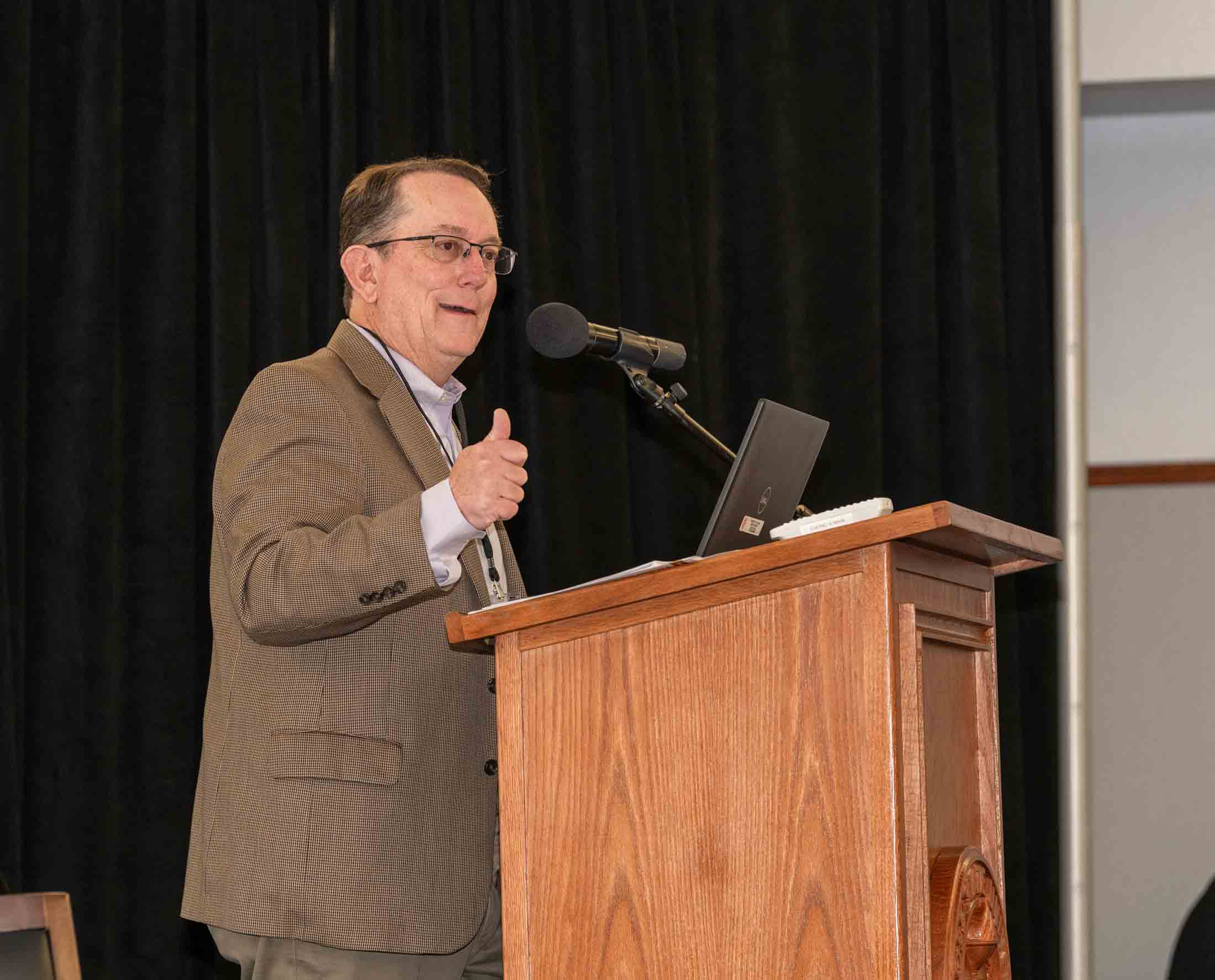
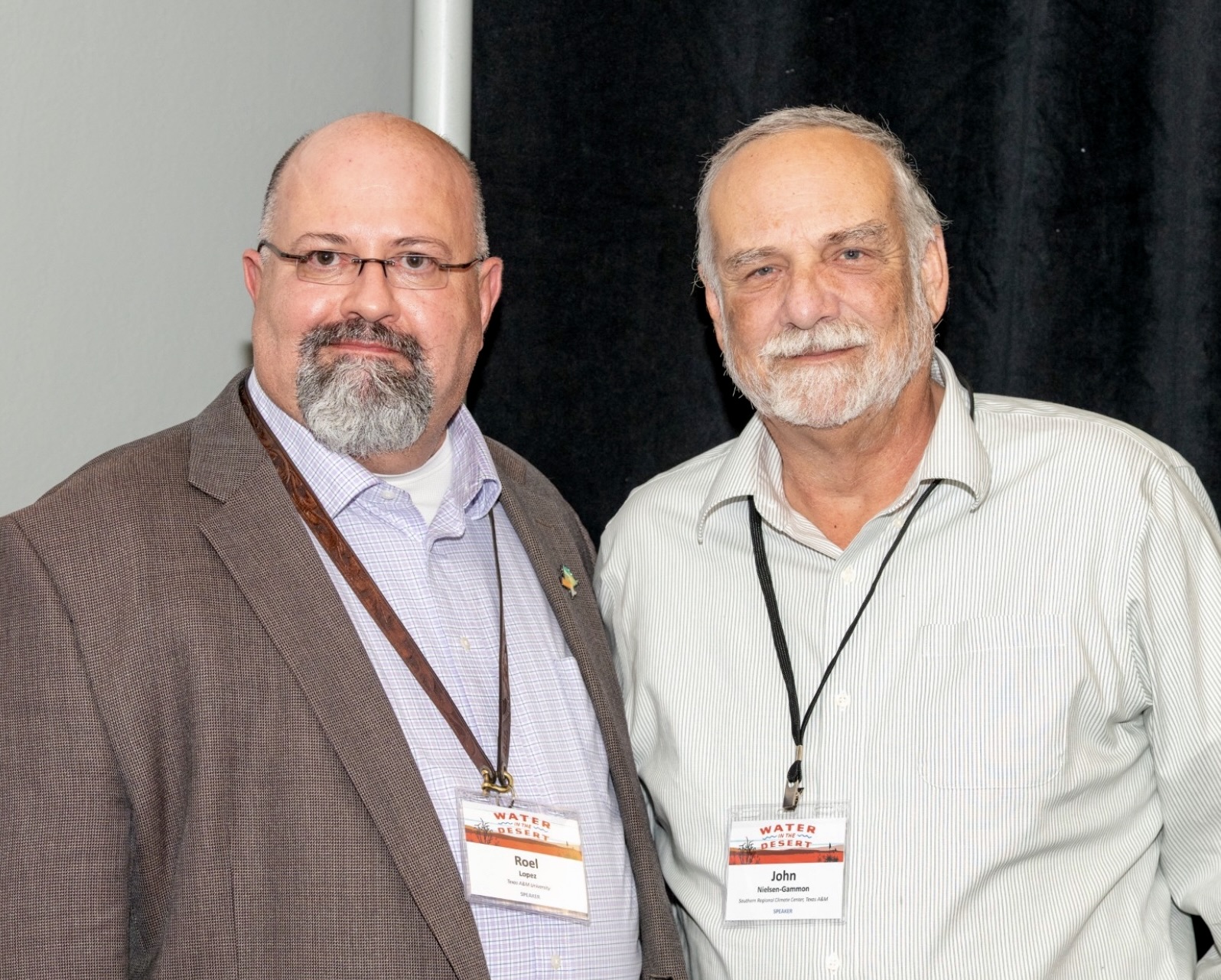
The opening session of Water in the Desert 2026 featured Dr. Louis Harveson of Sul Ross State University, Dr. Roel Lopez of the Texas A&M Natural Resources Institute, and State Climatologist Dr. John Nielsen-Gammon.
Harveson opened the discussion by asking:
“What can we slow down? What do we need to be doing? What does the Meadows Research Institute for West Texas Water need to be doing to deal with population pressures and land use changes?”
Having lived in the desert for nearly three decades, he acknowledged that the Trans-Pecos has long been different from other parts of Texas. But, he cautioned, “that’s not gonna hold up in my opinion.”
Land Fragmentation
Lopez addressed land fragmentation trends in West Texas and how they differ from other regions of the state.
“The fragmentation or conversion here is different,” he said.
In other parts of Texas, ranches are often subdivided into smaller residential tracts. In the Trans-Pecos, he noted that subdivisions may be platted but frequently do not move forward.
“You may have a large tract that’s platted for a subdivision,” Lopez explained, “but it never materializes when people realize there’s no power, there’s no water.”
He added, “I just don’t see the boom that we see in other parts of the state.”
Lopez suggested that future land-use pressures in the region may be more closely tied to energy development than to large-scale residential growth.
At one point, Lopez joked that he sometimes tells Harveson, “This West Texas thing would be so much nicer if it was outside of Boerne.” Harveson’s response, he said, is consistent: “That’s precisely why we’re here.”
Climate and Adaptation
Nielsen-Gammon addressed climate trends in the region.
“We can’t really do much about the climate locally,” he said.
He emphasized the need for adaptation, stating that communities must focus on “understanding what the ecosystem supports, what working lands can support in a changing climate.”
He explained that a warmer climate can be compared to lowering the land in elevation.
“A warmer climate is equivalent to essentially lowering the land by a hundred or two hundred feet,” he said, noting that vegetation and productivity shift with changes in elevation and temperature.
He described declining soil moisture as one of the clearest signals of warming.
“Water doesn’t stay in the soil as long. It evaporates more rapidly.”
Reduced soil moisture affects both plant demand and aquifer recharge.
“The pressure is on them both sides,” he said, referring to aquifers experiencing increased demand while receiving less recharge.
Nielsen-Gammon noted that aquifer responses vary depending on geology and local conditions.
Watersheds and Water Quality
Lopez acknowledged that while aquifer modeling is not the primary focus of his institute, watershed management plays an important role.
“What we bring to the table is how changes in watersheds and landscapes can impact water quality and water abundance,” he said.
He referenced vegetation management and landscape changes as factors that can influence infiltration and runoff.
Rule of Capture
During audience questions, the rule of capture was raised.
Harveson responded, “We have a titillating conversation about the rule of capture tomorrow. Let’s make sure we address that then.”
The exchange drew laughter from the audience.
Setting the Tone
By the end of the session, the tone for Water in the Desert 2026 was clear.
West Texas may not face suburban sprawl at Hill Country scale. But climate change, aquifer stress, and energy development are real forces. Soil moisture is declining. Recharge is uncertain. Demand is rising.
The response cannot be guesswork.
It must be data-driven, place-based, and collaborative. Above all, it must be adaptive.
The opening session offered no silver bullets. Instead, it offered clarity — about limits, variability, and the urgent need for research grounded in the realities of the Chihuahuan Desert.
For the Meadows Research Institute for West Texas Water, it is both a challenge and a mandate.
Sponsors and Organizing Partners
This conference session excerpt is from Water in the Desert 2026.
Water in the Desert 2026 was hosted and organized by the Meadows Research Institute for West Texas Water at Sul Ross State University.
The conference was made possible through the generous financial support of its major sponsors — Horizon Foundation, Dixon Water Foundation, and Reeves County Groundwater Conservation District — whose leadership investment ensured the event remained accessible and affordable to attendees from across the region.
Additional sponsors included Brewster County Groundwater Conservation District, Environmental Defense Fund, EHT–Enprotec Hibbs & Todd, Frontier Development Inc., Rio Grande Joint Venture, Texas Wildlife Association, and The Nature Conservancy.
The quality and depth of the program were shaped by a collaborative team of organizing partners, including Sul Ross State University, Borderlands Research Institute, Environmental Defense Fund, Rio Grande Joint Venture, Texas Water Foundation, Texas Agricultural Land Trust, Dixon Water Foundation, Texas Wildlife Association, The Nature Conservancy, Texas Parks and Wildlife Department, and Texas Parks and Wildlife Foundation.