Small Team, Big Vision for West Texas Water
Water in the Desert 2026
Feb. 12 – 3:30 pm Session
In one of the most dynamic sessions of the conference, the Meadows Research Institute for West Texas Water (MRI) took the stage for its public debut.
Billed as “Research Lightning Rounds,” the session packed five presentations—plus opening remarks from Eric Meadows—into just 30 minutes. The rapid-fire format was intentional: a fast-paced introduction to the institute’s research priorities, early findings and future direction.
This was MRI’s small but mighty team stepping forward together—scientists from different disciplines united by a shared mission to address water challenges in the Trans-Pecos. It was also a defining moment for the institute, offering a glimpse of how applied research, education and collaboration will come together to serve the region.
From groundwater science to aquatic ecology to invasive species management, the presentations reflected both the breadth of expertise and the urgency of the work ahead.
The pace was brisk. The ideas were big. And the message was clear: MRI is here, and it is getting to work.
Eric Meadows
The Meadows Foundation — A Legacy Invested in Texas Water
Eric Meadows opened the session by tracing the evolution of the Meadows Foundation’s work and its growing commitment to water in Texas.
The foundation was established in 1948 by Meadows’ great uncle, an oil and gas entrepreneur who believed strongly in giving back.
“He felt strongly that what he had earned in Texas should be reinvested back into the state,” Meadows said.
For decades, the foundation focused on traditional philanthropy—supporting hospitals, schools and cultural institutions. Over time, its leadership began placing greater emphasis on environmental conservation.
That shift took a significant step forward in 2012, when the foundation made a major investment in water research at Texas State University’s Meadows Center for Water and the Environment.
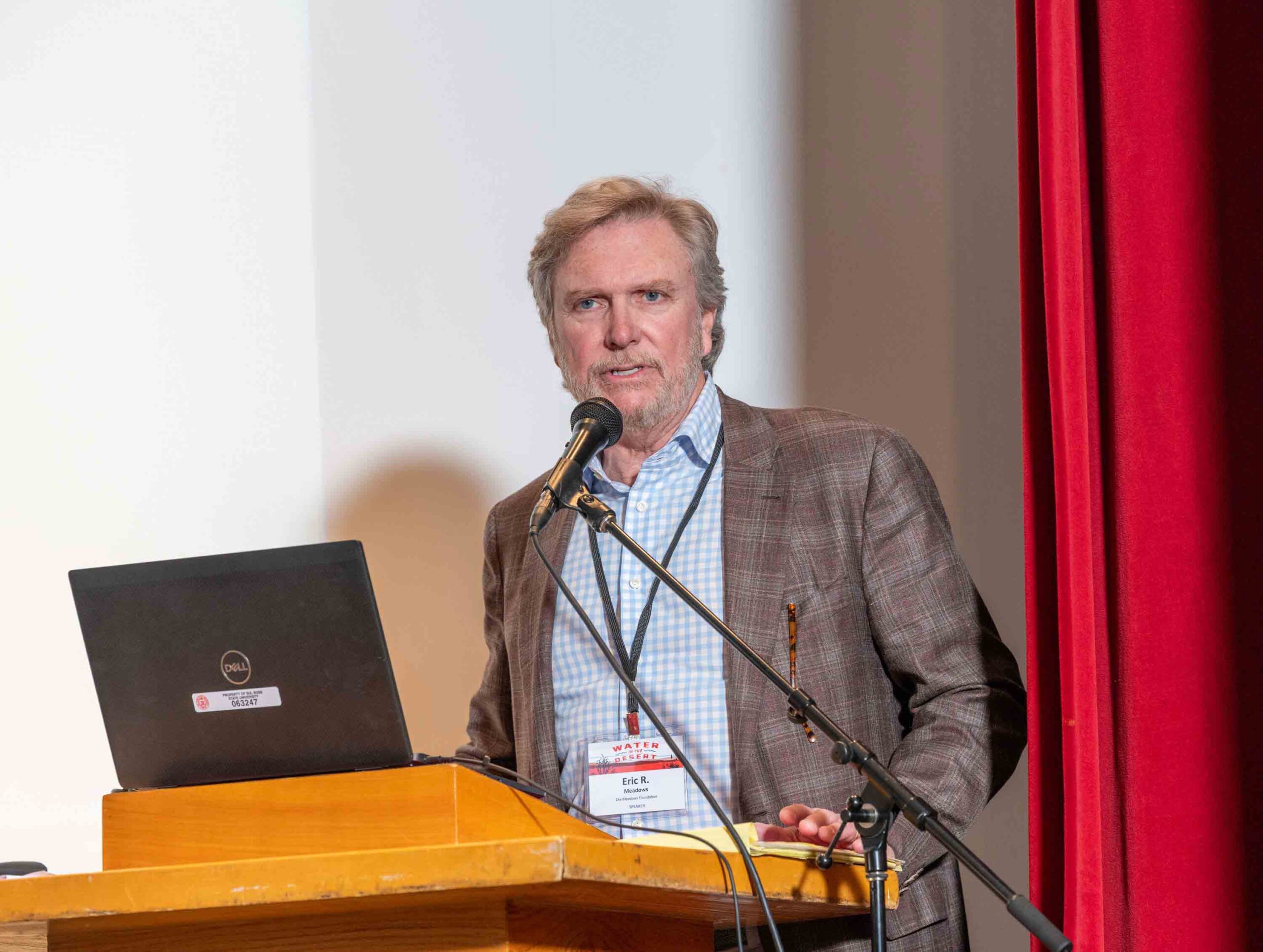
Still, Meadows said, the opportunity in West Texas did not fully crystallize until the first Water in the Desert conference in 2024.
“We started learning about the needs and felt there was a real opportunity to make a difference,” he said.
Those conversations ultimately led to the creation of the Meadows Research Institute for West Texas Water—an effort Meadows described as coming “full circle,” aligning the foundation’s mission with one of the state’s most pressing challenges.
He emphasized that strong leadership at Sul Ross State University—and the collaborative approach taken by partners across the region—were key to making that investment possible.
“If you don’t have that kind of leadership … you’re not going to be able to attract philanthropy and dollars to it,” Meadows said.
He also recognized several individuals who helped bring the institute to life, including Louis Harveson, Sarah Schlessinger, Vanessa Puig-Williams, interim director Billy Tarrant and senior research scientist Kevin Urbanczyk, along with the broader Sul Ross State University leadership team.
Looking ahead, Meadows expressed optimism about the role the institute can play in bringing people together around water.
“You’ve got something really good going on,” he said. “And I feel like West Texas water is going to be able to unify us.”
Dr. Kevin Urbanczyk
Groundwater and the Lifeblood of the Rio Grande
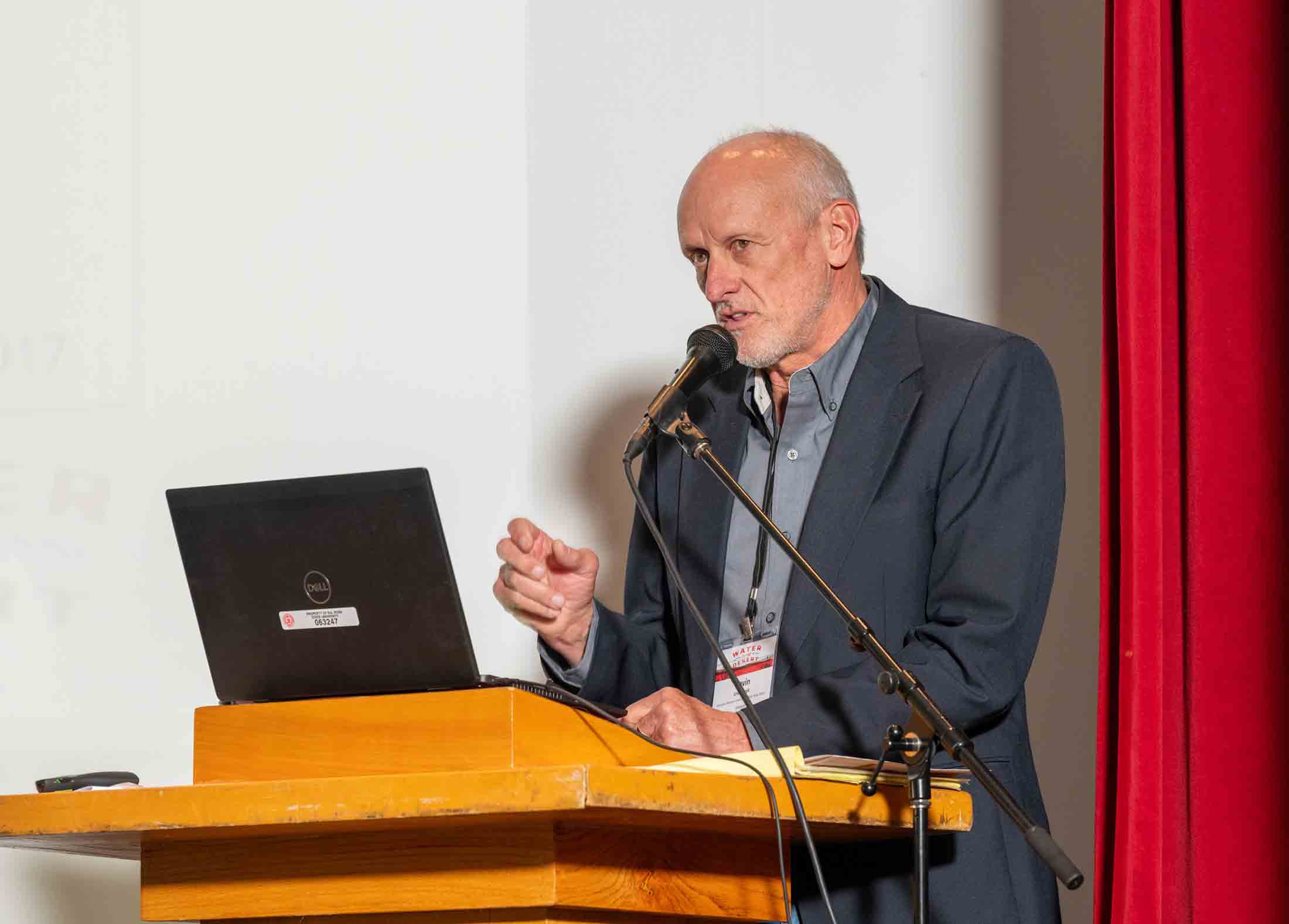
Dr. Kevin Urbanczyk brought decades of experience to his presentation, offering a deep, place-based perspective on how groundwater sustains the Rio Grande.
A professor of geology at Sul Ross State University since 1991, Urbanczyk has spent 35 years studying the hydrology and geomorphology of West Texas. His long track record of research in the region has made him one of the leading experts on groundwater-surface water interactions in the Trans-Pecos.
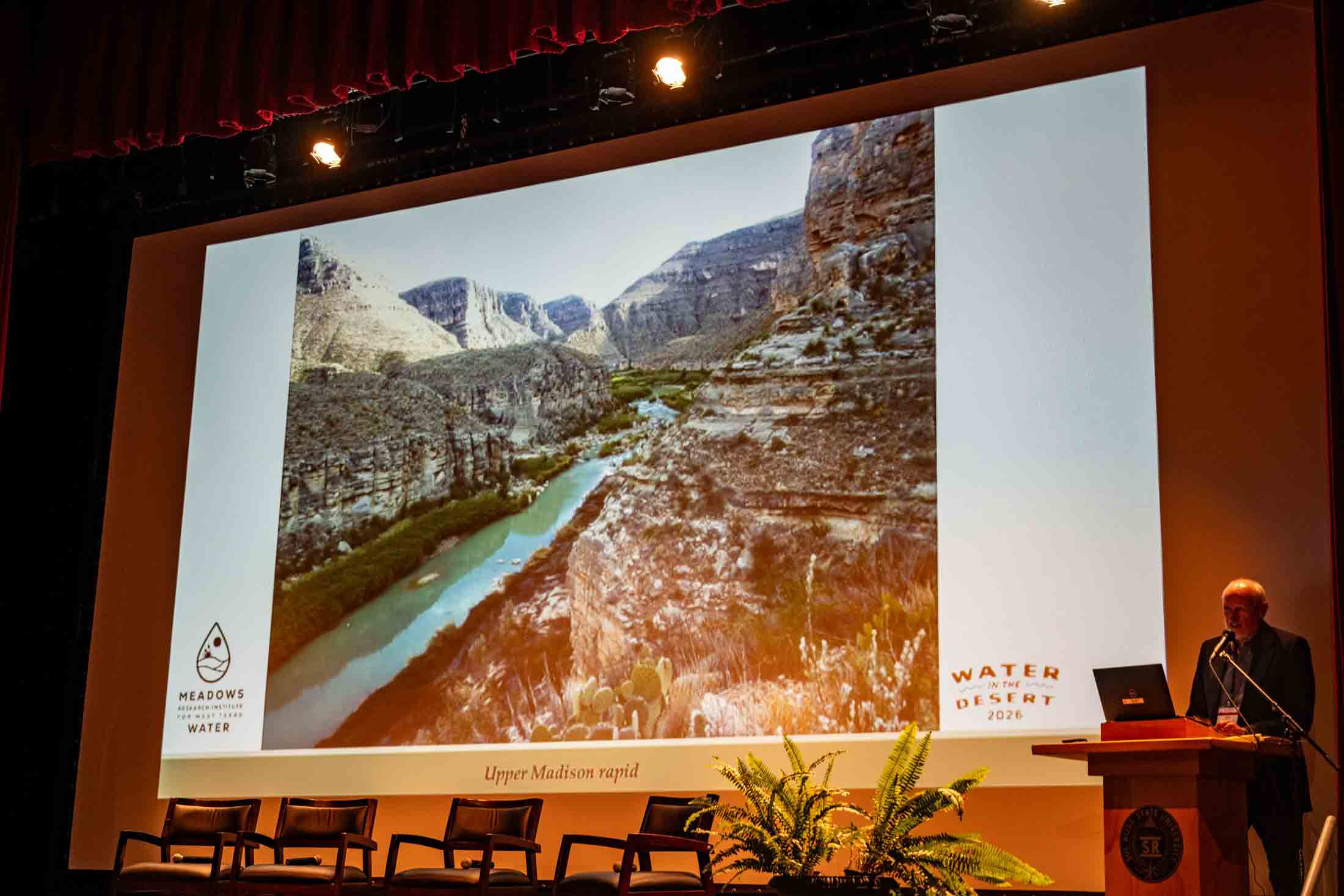
In the session, he focused on the Lower Canyons of the Rio Grande, where his team uses gain-loss studies to measure how river flows change along specific stretches. By collecting flow data at multiple points over a short period, researchers can identify where groundwater is entering the river—and where it is being lost.
The findings underscore the critical role groundwater plays in sustaining the system.
Groundwater contributions to this stretch of the Rio Grande are estimated at roughly 180,000 acre-feet per year—an essential source of flow in a region where surface water supplies are increasingly uncertain.
In some cases, Urbanczyk noted, these groundwater inputs may be the only reliable water sustaining portions of the river, particularly when upstream deliveries fluctuate.
He also emphasized the ecological importance of these flows, describing parts of the river as “groundwater-dependent ecosystems” that support sensitive and endangered species.
The work highlights the need to better understand the connections between groundwater and surface water—and the role those connections play in both water supply and ecosystem health.
Dr. Jesse Kelsch
Unlocking Groundwater Through Geology
Dr. Jesse Kelsch explored how the geology of West Texas shapes the movement and availability of groundwater.
Unlike regions where water is stored in porous sands and gravels, much of the Trans-Pecos relies on fractured rock systems—networks of cracks created by tectonic forces and volcanic activity.
“Our groundwater is reliant on those interconnected fractures,” Kelsch said.
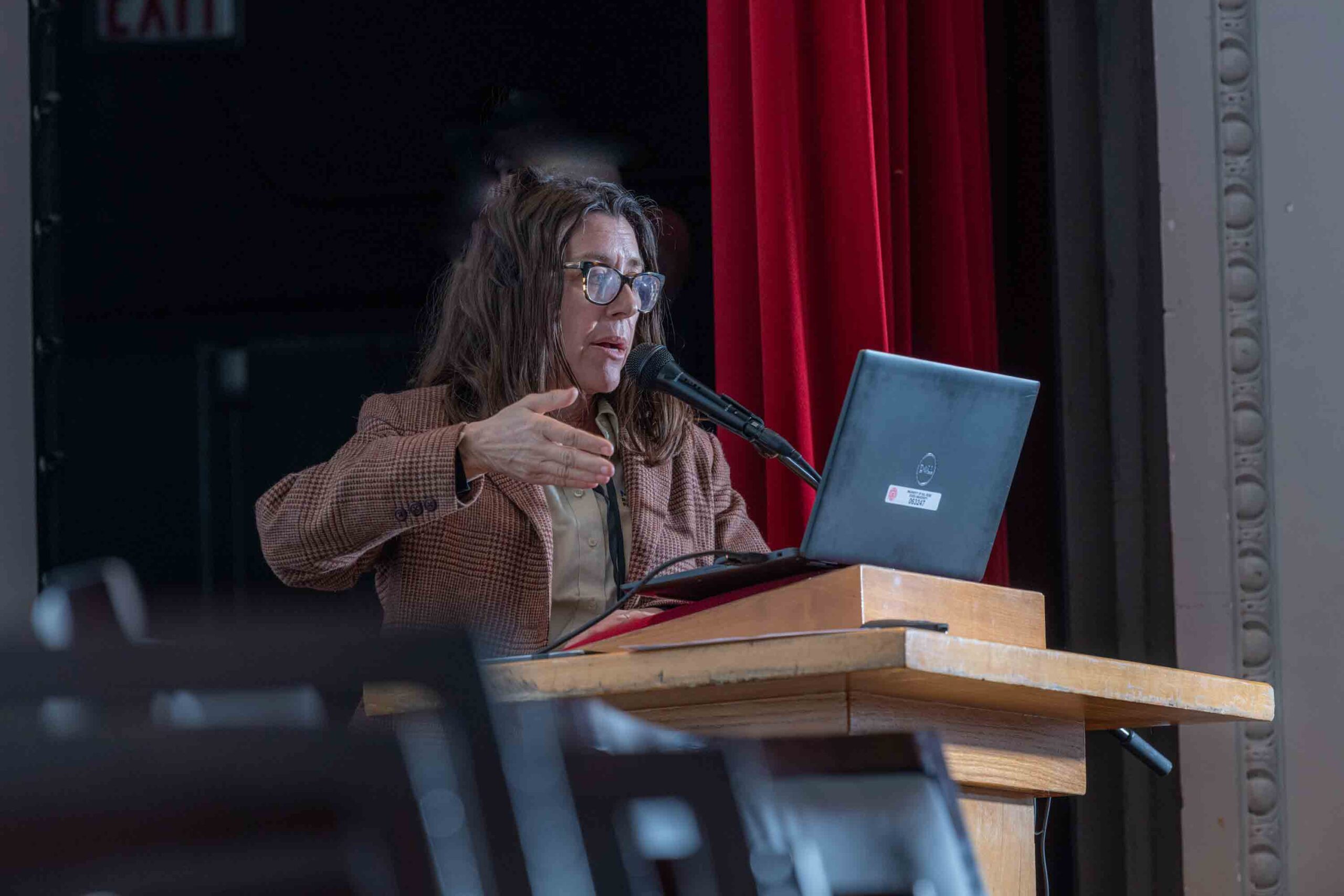
Understanding those fracture networks is key to predicting how water moves underground.
Her research combines detailed field mapping—measuring fracture orientation, spacing and connectivity—with digital modeling techniques. The goal is to build fracture network models that can be incorporated into groundwater flow simulations.
By improving those models, researchers can better estimate how water moves through aquifers, where it is stored and how it may respond to future pressures.
Kelsch said the work is particularly important in areas like the San Solomon Springs region, the Lower Canyons and the still poorly defined Santa Elena aquifer.
Ultimately, she said, the research aims to improve decision-making by providing a clearer picture of how groundwater systems function in West Texas.
Dr. Kelbi Delaune
Reading the Health of Desert Waters
Dr. Kelbi Delaune brought an ecological perspective to the session, focusing on how water systems support life—and what those systems reveal about broader environmental change.
Desert waters appear in many forms, she said, including springs, rivers, wetlands and cienegas, each supporting unique biological communities.
“These systems are all connected,” Delaune said.
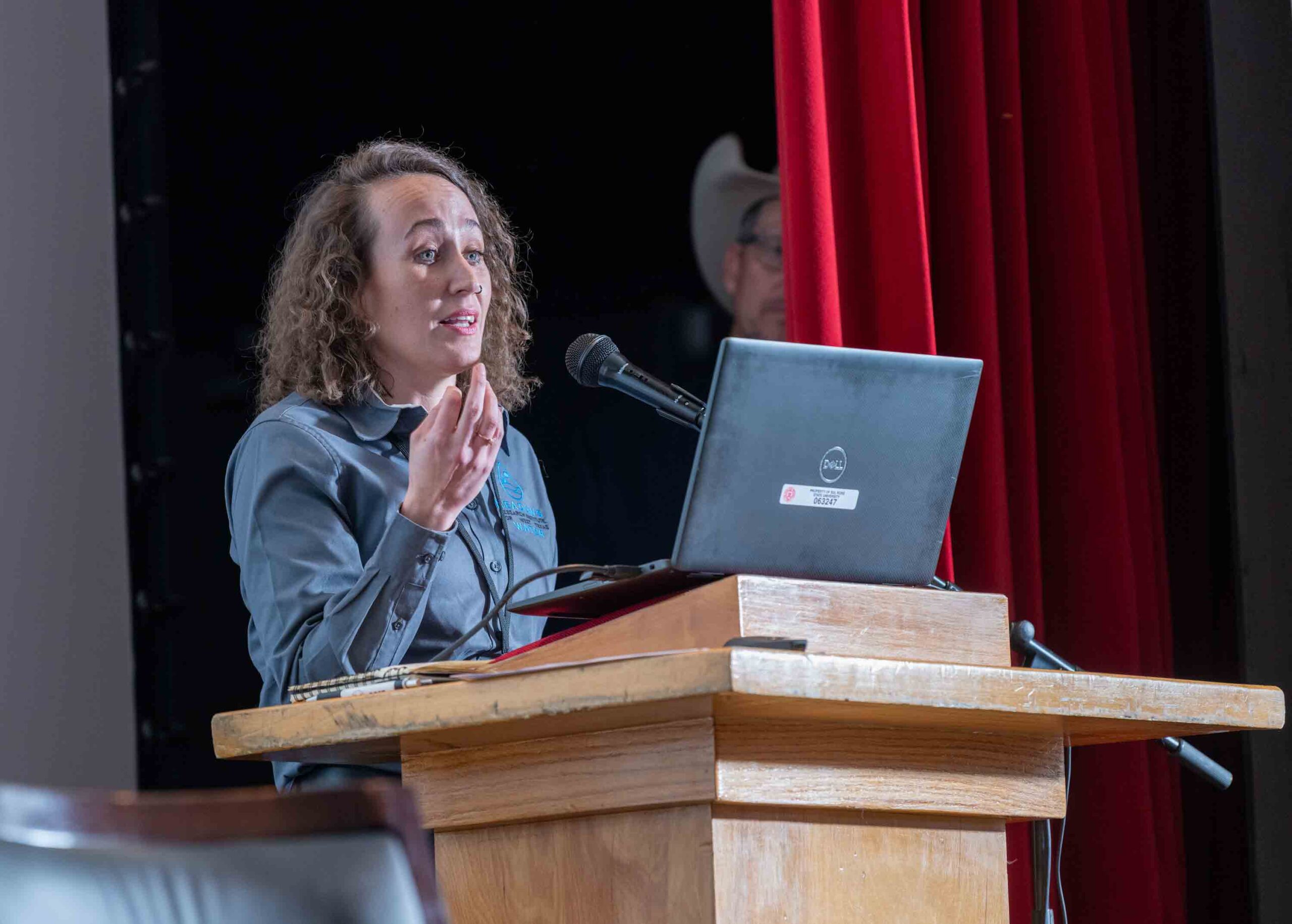
Her research examines how changes in water quantity and quality affect those systems. Key stressors include declining groundwater levels, increasing salinity and the spread of invasive species.
In places like the Pecos River, she said, those pressures are already reshaping aquatic communities—sometimes replacing native species with those more tolerant of changing conditions.
Delaune emphasized that aquatic ecosystems can serve as early indicators of change.
“Groundwater sets the conditions, surface water expresses them, and aquatic communities reveal the outcomes,” she said.
By studying those systems, researchers can better understand the cumulative impacts of water management decisions—and identify opportunities to protect and restore ecological health.
Salt Cedar Biocontrol Research
Restoring Balance Along Western Rivers
The final presentation focused on efforts to manage salt cedar, an invasive species that has altered riparian ecosystems across West Texas.
Introduced in the 1800s for erosion control, salt cedar has since spread widely, outcompeting native vegetation and reducing biodiversity along rivers such as the Rio Grande and Pecos.
Researchers are addressing the problem through biological control—using tamarisk beetles to reduce salt cedar populations over time.
“The goal is not to eradicate salt cedar,” the presenter said. “It’s to reduce its amount and allow native vegetation to come back.”
Since initial releases in Texas in the late 1990s, beetle populations have expanded across river systems, defoliating salt cedar and helping shift the balance back toward native species.
Recent work has focused on monitoring beetle populations and reestablishing them in areas like the Pecos River, where additional control is needed.The effort reflects a broader theme of the session: practical, science-based solutions that work with natural systems to restore balance and resilience in West Texas watersheds.
Sponsors and Organizing Partners
This conference session excerpt is from Water in the Desert 2026.
Water in the Desert 2026 was hosted and organized by the Meadows Research Institute for West Texas Water at Sul Ross State University.
The conference was made possible through the generous financial support of its major sponsors — Horizon Foundation, Dixon Water Foundation, and Reeves County Groundwater Conservation District — whose leadership investment ensured the event remained accessible and affordable to attendees from across the region.
Additional sponsors included Brewster County Groundwater Conservation District, Environmental Defense Fund, EHT–Enprotec Hibbs & Todd, Frontier Development Inc., Rio Grande Joint Venture, Texas Wildlife Association, and The Nature Conservancy.
The quality and depth of the program were shaped by a collaborative team of organizing partners, including Sul Ross State University, Borderlands Research Institute, Environmental Defense Fund, Rio Grande Joint Venture, Texas Water Foundation, Texas Agricultural Land Trust, Dixon Water Foundation, Texas Wildlife Association, The Nature Conservancy, Texas Parks and Wildlife Department, and Texas Parks and Wildlife Foundation.