A sharing of wisdom, and stories from the past that help guide our land and water future.
Water in the Desert 2026
Feb. 12 – 4:00 pm Session
The final session of the conference shifted from science and policy to something equally important: experience.
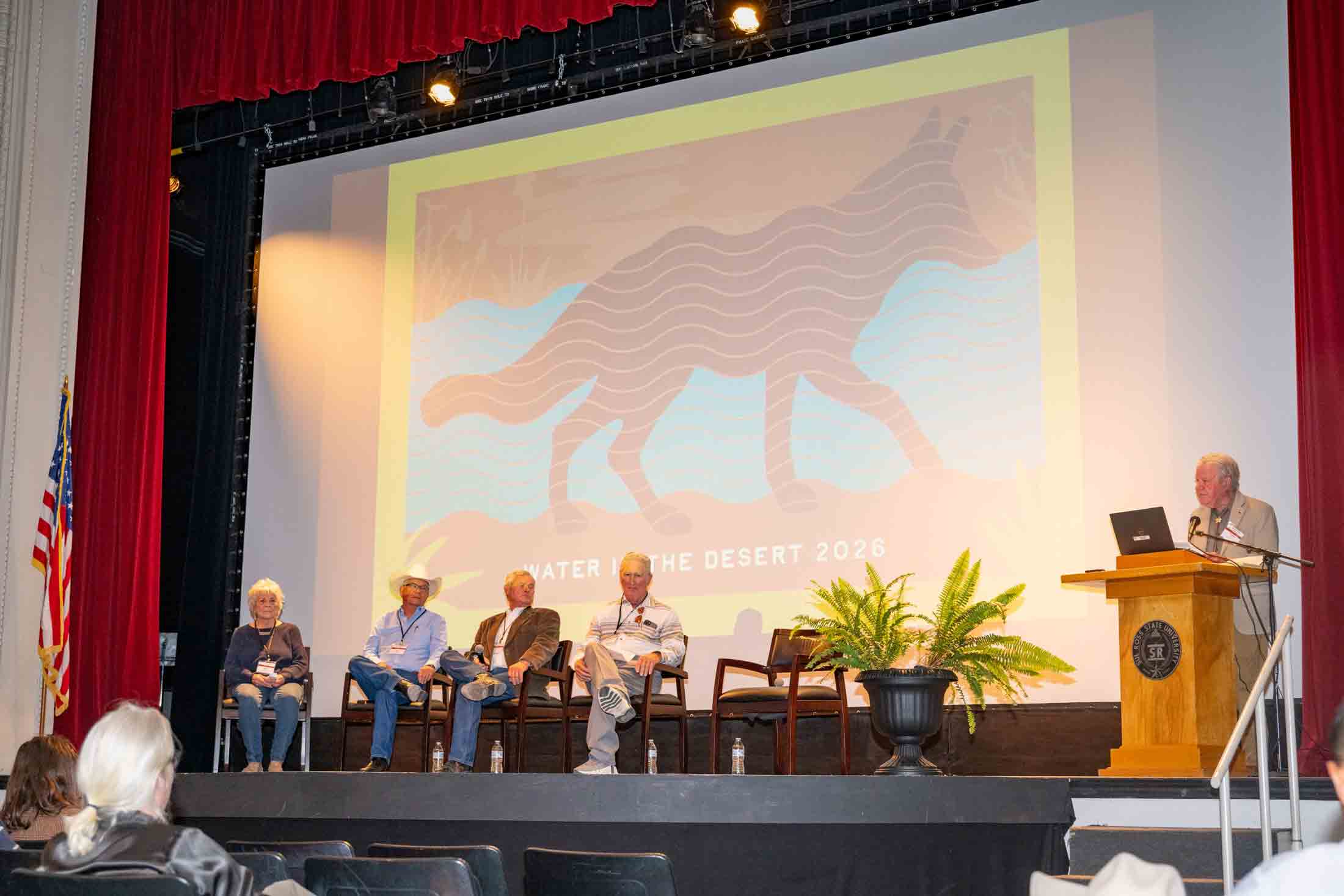
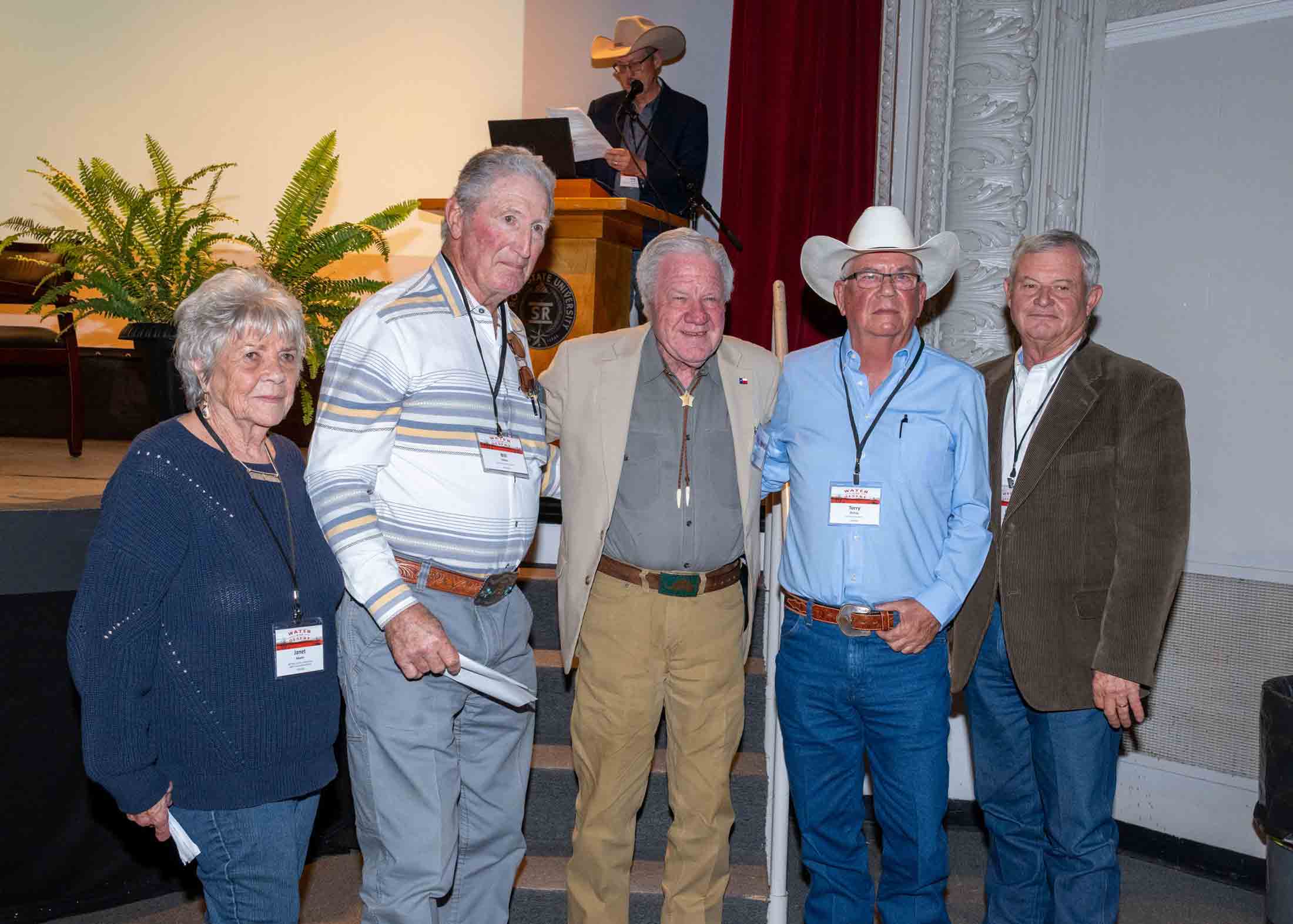
Moderated by noted Texas conservation leader Andrew Sansom, the panel brought together longtime West Texas landowners whose lives and livelihoods have been shaped by the region’s harsh climate and scarce water resources. Presidio Valley farmer Terry Bishop, Jeff Davis County water leader Janet Adams, Culberson County rancher Bill Sibley and Pecos County rancher D.A. Harral shared lessons drawn from generations of working the land in the Trans-Pecos.
Sansom opened the discussion by returning to a theme raised earlier in the conference: sustainability.
Earlier in the day, water expert Brian Richter had described sustainability as managing water in a way that meets today’s needs while ensuring future generations can thrive. Sansom suggested that principle should guide how Texans think about groundwater use, property rights and stewardship of the land.
Generations of stewardship
For many of the panelists, stewardship is not theoretical — it is deeply personal.
Sibley described a ranching operation in Culberson County that has remained in his family for seven generations, spanning more than 125 years. Decisions about land and water management are often guided by the legacy of earlier generations and the responsibility to leave the land in good condition for those who follow.
Operating in one of the driest parts of Texas means constantly adapting to drought. In recent years, Sibley said, rainfall on the ranch has sometimes totaled only an inch or two annually.
Enduring those conditions requires persistence, creativity and a willingness to adapt.
Water infrastructure is essential. Many ranches rely on networks of wells, pipelines and storage tanks that allow water to be moved across large landscapes to support livestock and wildlife.
Maintaining those systems is constant work. On large ranches, dozens of wells may be operating at any given time, requiring daily monitoring and maintenance to ensure water continues to flow.
Water, land and wildlife
Panelists emphasized that water management cannot be separated from the way land itself is managed.
Healthy grasslands, soils and vegetation play a major role in how water moves across the landscape. Ranch management decisions — from grazing practices to habitat restoration — affect both water availability and ecosystem health.
Wildlife is also part of the equation. Mule deer and other native species depend on the same water sources that sustain ranch operations. Many ranchers develop water systems and habitat improvements that benefit both livestock and wildlife.
The health of the land, the availability of water and the success of ranching operations are closely tied together.
Farming along the Rio Grande
Bishop offered a different but related perspective: irrigated farming along the Rio Grande.
His family farms in the Presidio Valley using surface water diverted from the river. In a region where water supplies can be unpredictable, efficiency and careful management are essential.
Bishop also described a wetland restoration project on his property that uses treated municipal wastewater. The project created new wildlife habitat while allowing unused water to return to the river.
Today the restored wetland supports a wide range of birds and other wildlife — an example of how water reuse can support both agriculture and conservation.
Understanding groundwater
Adams brought the perspective of someone who has spent decades working with groundwater systems in Jeff Davis County.
She has served as general manager of the Fort Davis water supply system and has been involved with groundwater management in the region for nearly three decades.
One of her strongest messages was the importance of data.
Groundwater districts and communities need long-term information to understand how aquifers respond to drought and pumping. In Jeff Davis County, wells have been monitored for more than two decades, providing valuable insight into changing water levels.
The key, Adams said, is simple: collect reliable data and use it to guide decisions.
Lessons from the land
Harral, a fifth-generation rancher from Pecos County, reflected on the long history of water development on West Texas ranches.
Early ranchers depended on natural springs and a handful of reliable water sources. Over time they drilled wells, installed windmills and built water systems that allowed livestock to graze across vast, arid landscapes.
Even today, maintaining wells and water infrastructure remains one of the most important tasks on a ranch.
Without reliable water, neither livestock nor wildlife can survive in the desert environment of West Texas.
Keeping families on the land
As the session concluded, Sansom returned to a larger point that resonated throughout the discussion.
Most of Texas’ water originates on privately owned land — the farms and ranches that dominate the Trans-Pecos landscape. Protecting those landscapes and supporting the families who steward them is essential to solving the state’s long-term water challenges.
Texas continues to lose farms and ranches to fragmentation faster than almost any other state. If those lands are not conserved and responsibly managed, efforts to protect water resources will become far more difficult.
For Sansom, the message was clear: any lasting solution to Texas’ water challenges must include the people who live and work on the land.
Sponsors and Organizing Partners
This conference session excerpt is from Water in the Desert 2026.
Water in the Desert 2026 was hosted and organized by the Meadows Research Institute for West Texas Water at Sul Ross State University.
The conference was made possible through the generous financial support of its major sponsors — Horizon Foundation, Dixon Water Foundation, and Reeves County Groundwater Conservation District — whose leadership investment ensured the event remained accessible and affordable to attendees from across the region.
Additional sponsors included Brewster County Groundwater Conservation District, Environmental Defense Fund, EHT–Enprotec Hibbs & Todd, Frontier Development Inc., Rio Grande Joint Venture, Texas Wildlife Association, and The Nature Conservancy.
The quality and depth of the program were shaped by a collaborative team of organizing partners, including Sul Ross State University, Borderlands Research Institute, Environmental Defense Fund, Rio Grande Joint Venture, Texas Water Foundation, Texas Agricultural Land Trust, Dixon Water Foundation, Texas Wildlife Association, The Nature Conservancy, Texas Parks and Wildlife Department, and Texas Parks and Wildlife Foundation.